




- Joined
- Jun 11, 2021
- Messages
- 2,349
- Likes
- 25,380
It was around 1969 when some relatives came to visit. Their road trip took them through Tijuana where they bought and gifted my two brothers each a switchblade. I remember watching as they showed them off, the quick snap of the blades, the excitement in their voices. It was the first time I understood, quietly but clearly, that there were things they could have that I could not. That realization stayed with me longer than the visit itself.
Not everything felt unequal, though. My father made sure of that. He taught me how to ride a motorcycle, how to change the oil and a flat tire on my 1968 VW Beetle, how to shoot a gun out in the Cajon Pass, and even how to siphon gas from a car. He treated me no differently than my brothers, and I carried that with me. There were small differences—he liked my long hair and didn’t want my mom to cut it, while my brothers wore buzz cuts—but I never felt less capable in his eyes. When he took us shopping for school clothes, I learned my waist and inseam before I ever learned anything about women’s sizes. For a long time, I lived in Levi’s and Hang Ten shirts, not thinking much of it. Years later, I would find my way to the women’s department, thank goodness.
There were other lessons, too. My brother once shot me with his BB gun. He told our mom it ricocheted off a tree, but I’ve always suspected otherwise. It stung more than it hurt, but I cried anyway. Whatever curiosity I might have had about guns faded quickly after that.
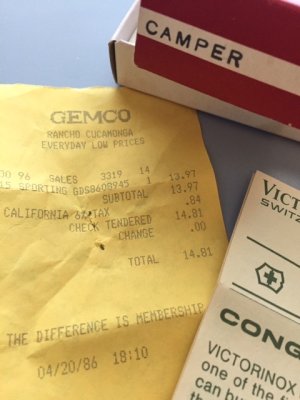
I didn’t get my first knife until I was a young adult. I remember the exact day: April 20, 1986, 40 years ago today. It was the day my cat, Maui, died. I was devastated in a way that felt physical, like something had been hollowed out inside me. Later that day, I went to Gemco, not looking for anything in particular, just needing to be somewhere other than home. I found myself at the sporting goods counter, standing in front of a rotating display of Swiss Army knives. I had always liked them, mostly from watching MacGyver—how he could solve almost anything with a small, clever tool and a bit of ingenuity. There was always a way out, always a resolution.
I chose a Victorinox Camper.
That knife became my Maui knife. I carried it nearly every day for the next five years. It was more than a tool—it was a small, steady presence, something I could reach for. I developed a habit of tapping my right pocket to make sure it was still there. It always was, until one day it wasn’t.
I had just left a movie theater when I noticed it missing. I went back almost immediately, retraced my steps, checked the seat, the floor, the lobby. It was gone. Losing it felt oddly similar to losing Maui: sudden, quiet, and final.
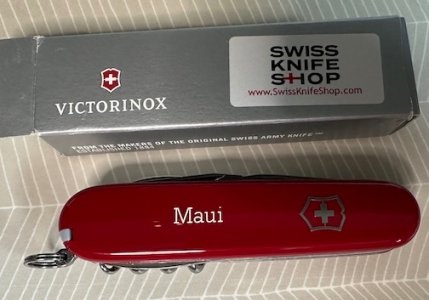
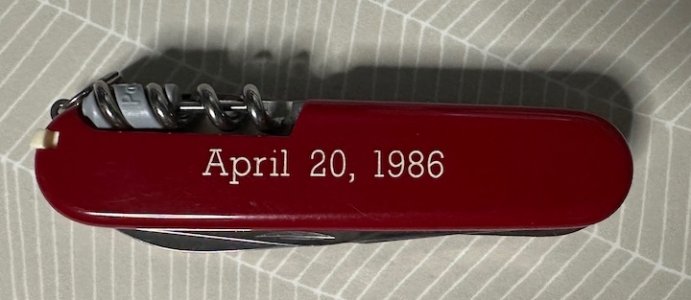
I still have the original box. Years later, a friend gave me another Camper, engraved with Maui’s name and the date I bought the first one. It meant more than I expected it to.
Over time, knives became more than something I carried. They became something I appreciated—design, function, craftsmanship. I gravitated toward brands that felt honest in their purpose: Mora for its simplicity and value, Opinel for its clean slicing ability, Spyderco for its efficiency, and Chris Reeve for its precision and enduring quality. Each one offered something slightly different, but all of them shared a sense of reliability I’ve always valued.
Looking back, it’s not really about the knives themselves. It never was. It’s about what they represent—independence, capability, memory. From the sting of that first exclusion, to the steady encouragement of my father, to the quiet comfort of a small red knife in my pocket, each moment shaped how I moved through the world.
Not everything felt unequal, though. My father made sure of that. He taught me how to ride a motorcycle, how to change the oil and a flat tire on my 1968 VW Beetle, how to shoot a gun out in the Cajon Pass, and even how to siphon gas from a car. He treated me no differently than my brothers, and I carried that with me. There were small differences—he liked my long hair and didn’t want my mom to cut it, while my brothers wore buzz cuts—but I never felt less capable in his eyes. When he took us shopping for school clothes, I learned my waist and inseam before I ever learned anything about women’s sizes. For a long time, I lived in Levi’s and Hang Ten shirts, not thinking much of it. Years later, I would find my way to the women’s department, thank goodness.
There were other lessons, too. My brother once shot me with his BB gun. He told our mom it ricocheted off a tree, but I’ve always suspected otherwise. It stung more than it hurt, but I cried anyway. Whatever curiosity I might have had about guns faded quickly after that.
I didn’t get my first knife until I was a young adult. I remember the exact day: April 20, 1986, 40 years ago today. It was the day my cat, Maui, died. I was devastated in a way that felt physical, like something had been hollowed out inside me. Later that day, I went to Gemco, not looking for anything in particular, just needing to be somewhere other than home. I found myself at the sporting goods counter, standing in front of a rotating display of Swiss Army knives. I had always liked them, mostly from watching MacGyver—how he could solve almost anything with a small, clever tool and a bit of ingenuity. There was always a way out, always a resolution.
I chose a Victorinox Camper.
That knife became my Maui knife. I carried it nearly every day for the next five years. It was more than a tool—it was a small, steady presence, something I could reach for. I developed a habit of tapping my right pocket to make sure it was still there. It always was, until one day it wasn’t.
I had just left a movie theater when I noticed it missing. I went back almost immediately, retraced my steps, checked the seat, the floor, the lobby. It was gone. Losing it felt oddly similar to losing Maui: sudden, quiet, and final.
I still have the original box. Years later, a friend gave me another Camper, engraved with Maui’s name and the date I bought the first one. It meant more than I expected it to.
Over time, knives became more than something I carried. They became something I appreciated—design, function, craftsmanship. I gravitated toward brands that felt honest in their purpose: Mora for its simplicity and value, Opinel for its clean slicing ability, Spyderco for its efficiency, and Chris Reeve for its precision and enduring quality. Each one offered something slightly different, but all of them shared a sense of reliability I’ve always valued.
Looking back, it’s not really about the knives themselves. It never was. It’s about what they represent—independence, capability, memory. From the sting of that first exclusion, to the steady encouragement of my father, to the quiet comfort of a small red knife in my pocket, each moment shaped how I moved through the world.


