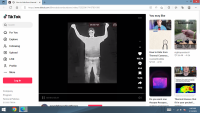
Avoiding thermal image detection. People with military training on this please comment


300Dman

Bushwhacker
Lifetime Supporter
Joined
Jan 30, 2022
Messages
12,919
Likes
40,898
I am posting this thread to avoid a person argument on this. I said you can hide from thermal imaging and another person essentially indicated no and posted a pic with a deer in it. So, I thought on in for a day of so and I realized that a deer has zero ideas on thermal imaging.

I also had commented that groups like HAMAS would wet their clothing down. However, I had no idea if that worked or not.

Can I hide from a Thermal Sensor? - YouTube

I think the key is understanding how thermal imaging works. I don't entirely understand that right now.
I watched the above vid which is mostly about a Gillispie but did show an emergency reflective blanket will block or distort your heat signature as will getting behind vegetation. Keeping that in mind setting up a blind even if it was say fabric used as a wall or a tarp above you if being viewed from the air. Some combination of tent and tarp hanging over that.

I have some of these. They don't cover below your elbow, but they also have camouflage ones.
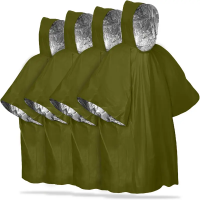
1747094481577.png

There is camouflage emergency reflective blankets.
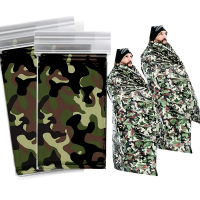
1747094600381.png

Not in this pic but they also have camo reflective bivy bags.
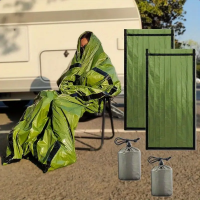
1747094912440.png
They also have tub tents of the same material.
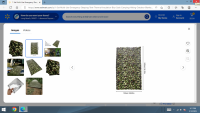
1747095085053.png

So that is it for reflective stuff. I am off to look at some other vids on the subject and may ad those.

To isomerize the video if you can get behind something that does that your body does not heat up you can block being viewed by thermal imaging. You could also do something like digging out the side of a hill to block you view from above and stay in that.
 
I have a FLIR thermal camera. It's meant for checking heat loss in insulation or wiring issues, and definitely not night vision or military anything. Happy to check any ideas that don't take too much trouble to recreate.
 
There are a bunch of youtube videos on it.

Ponchos work but eventually heat up and then don't work.


Thanks for posting this. I did not know the thermal imaging also worked during daylight. Hence if you conceal yourself under a reflective blanket the outside needs to be some camo color and not reflective.

I have not seen any reflective blankets with a desert camo on the non-reflective side.

This vid also showed that you could string tarp as a blind and block your heat signature.
 
I have a FLIR thermal camera. It's meant for checking heat loss in insulation or wiring issues, and definitely not night vision or military anything. Happy to check any ideas that don't take too much trouble to recreate.

Well, the one vid showed that a trash bag and it was claimed a polyester tarp would not block the Infared light. So, what I was saying is if you say wanted to find out if that tarp you already have works you need to get out your FLIR and test that to be sure.
 
It brings up another good issue to understand.

There is another predicament that could be hazardous. If you wanted to be found and they were also using thermal imaging to search for you using a reflective emergency blanket it is going to cover your heat signature, and you won't be detected that way.

Not a great choice. Suffer hypothermia and die or get injured from that or have your rescue miss you because they could not see your thermal image.

If you want to be found like that in the day light, you will need say an orange faced emergency blanket and/or have another signal setup.
 
Cheap poly tarp versed space blanket.

Your hot pee shows up for 30 minutes on thermal imaging.

Small cooking fire
How can you actually avoid thermal imaging?#shortvideo #military #war #facts - YouTube

Wool blanket does not work, an umbrella does.

How to avoid being detected by thermal imaging on the battlefield? #military - YouTube

How to hide from a thermal drone (Ukraine) - YouTube
 
Last edited:
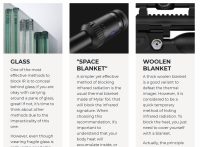
For infrared/thermals, you just need a barrier between your body and the sensor/camera. This can be as simple as having a pane of glass. Or a plywood board. Or reflective blanket spaced away from your body. After a while, any material will start transferring your body heat to the material if your body is in contact with it.

However, military grade night vision devices do not rely on thermal imaging to find people. Most of the time it just image intensifiers and this is where camouflage colors, and Near-IR (NIR) treatment does become important.
 
For infrared/thermals, you just need a barrier between your body and the sensor/camera. This can be as simple as having a pane of glass. Or a plywood board. Or reflective blanket spaced away from your body. After a while, any material will start transferring your body heat to the material if your body is in contact with it.

However, military grade night vision devices do not rely on thermal imaging to find people. Most of the time it just image intensifiers and this is where camouflage colors, and Near-IR (NIR) treatment does become important.

If I believe the videos, cheap poly tarps, trash bags ad wool blankets that appear to block Infared/thermal stuff don't. Before betting your life on them they need to be tested.

Likely there is videos on how to deal with night vision. Someone else can do that thread.

There is also ground radar and acoustical affliction for detection.
 
Thanks for posting this. I did not know the thermal imaging also worked during daylight. Hence if you conceal yourself under a reflective blanket the outside needs to be some camo color and not reflective.

I have not seen any reflective blankets with a desert camo on the non-reflective side.

This vid also showed that you could string tarp as a blind and block your heat signature.
If you specifically wanted desert cam. Double bubble a cam poncho with a space blanket?
 
If I believe the videos, cheap poly tarps, trash bags ad wool blankets that appear to block Infared/thermal stuff don't. Before betting your life on them they need to be tested.

Likely there is videos on how to deal with night vision. Someone else can do that thread.

There is also ground radar and acoustical affliction for detection.

And you will sound like a bag of chips walking around. Which could give you away.
 
If I believe the videos, cheap poly tarps, trash bags ad wool blankets that appear to block Infared/thermal stuff don't. Before betting your life on them they need to be tested.

Likely there is videos on how to deal with night vision. Someone else can do that thread.

There is also ground radar and acoustical affliction for detection.
Right, all of which either are directly on your body, thus transferring body heat out, or thermally transparent. Thermal viewing devices aren't X-ray vision.
 
One video I posted somewhere on here recently was from the front line in Ukraine. He stressed that the object is to fool the operator and not the camera by obscuring your shape. They were making snipers hides in earthen-covered deadfalls and only poking out the rifle in a small hole which they also obscured with insulation.

I have heard but not tested yet that a foil bubble wrap such as a car shade or hammock insulating pad can work well.

1747128869081.png
1747128890598.png
1747128917209.png


1747129275922.png
1747129306649.png
1747129329512.png


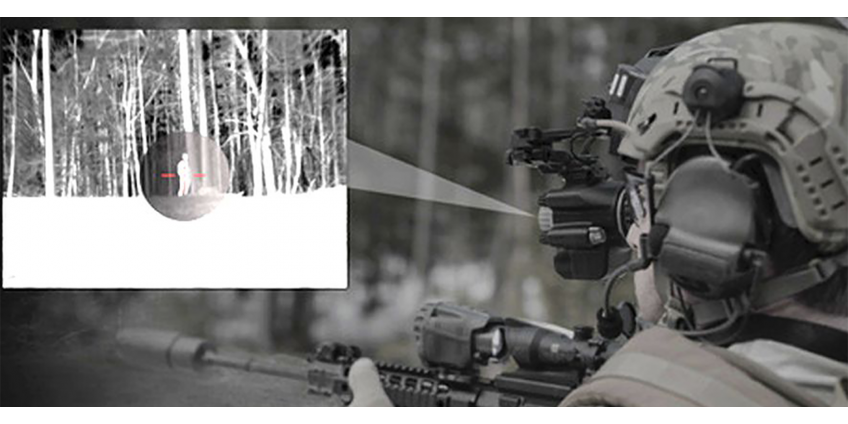
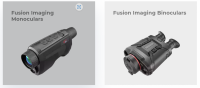
The new devices are Night Vision and Thermal together, like the AGM Fusion

1747130413421.png
1747130444343.png

AGM Fusion Imaging devices


Last edited:
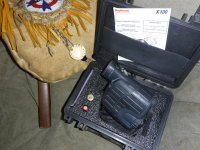
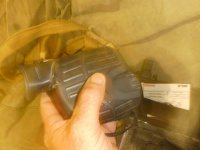
This is hard tech to beat....I was gifted a nice thermal, It will pick up mice in the thick grass, during the day, It will pick up people behind their curtains, We have messed with the Mylar tarps, but if it touches, or you are too close to tarp it will pick you up. Nobody has been able to sit still enough to not show up, in my messing with it. This monocular will even pick up where you have been sitting....

001.JPG

That being said, it is tech I don't like to use....it causes an effect to optic nerve, at night, a "night blindness" that is deep inside the eye....it takes a few minutes to go away. I can't help but feel after too much use, damage may occur. This device does tether to a camera, and that may be the way to use it, rather than using the eye piece. another drawback is when pulling away from face, you light up like a Christmas tree. There is a "warm up" for this that is maybe 15 seconds, so it isn't instant use, in emergency....

But it is fascinating study
002.JPG
 
20 years of reconnaissance experience here, thermals are very beatable. Your primary tool is using terrain to mask your signature. For example, I watched an entire infantry company (OPFOR) infiltrate a manned, alert, US primary defensive line in an open desert by following a wadi for several kilometers. The thermals cannot see through dirt and trees. Your secondary options are confusing the operator or reading to many signatures for them to differentiate. When I was in Afghanistan, it was very hard to find the enemy because there were so many hot arsed rocks throwing heat signatures well into the night. Finally, you need to consider whether you are going against a ground or air based system (or both!) and plan accordingly.
 
Thankfully moose, mountain lions and grizzly bears have not adopted this tech. I’m too old, damaged and fat to even LARP as myself as a 22 year old paratrooper.

Long winded way of saying that thermal defense has no place in my wilderness leisure time activities.
 
A boulder field has so much thermal variability that it is easy for a person to hide, if they're not moving.
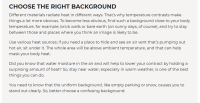
Another strategy is thermal decoys. A kerosene lantern is a good starting point for a decoy setup. It will also wash out traditional night vision.

When thermal detection is of high concern movement is limited to extreme bad weather, underground, VERY thick vegetation, and hidden inside civilian transit.
Basically follow the principles of camoflauge but take away the effectiveness of concealment and color.
 
I would recommend a large camouflage or clear umbrella. The umbrella does not heat up because there you are not directly holding the fabric and air flow is allowed under it to keep it cool. I use a lot of thermal imaging when I night stalk wild boar. Glass pane works too but it is obvious to see its shape. I believe that the umbrella is the most cost efficient, lightweight solution for this problem but you have to be looking at the camera straight on.

Kind regards,
 
I've spotted rabbits through ancient tech night vision on an M60A3 tank, as well as 80s-era M1s, from thousands of yards away. We could spot mice too, but had to be closer in due to pixellation (at some point, a pixel becomes the same same size as the mouse.)

Given the gun camera footage that came out of the GWOT, the two Gulf Wars that preceded, it, and the Yugoslav air war before that, I'd say you can conceal yourself underground to some extent, but not wearing normal clothing. Water's not going to help; you maybe can't see as MUCH heat, but you still see a human shape; it's just not white hot or black hot. You can tell uniform camoflage colors, they just look like a black and white photo, not brown/green/tan. Ukraine UAV footage shows similar results... yes, you can shield your body heat to some degree... but not forever.

Go with what YouTube tells you.
 
While it is technically possible to setup a scenario in which one is able to avoid thermal detection, it ain't happening. With the edition of AI the scope will literally trace your outline and track you. The ability to deploy literally thousands of drones makes the world a very difficult place to hide.
 
While it is technically possible to setup a scenario in which one is able to avoid thermal detection, it ain't happening. With the edition of AI the scope will literally trace your outline and track you. The ability to deploy literally thousands of drones makes the world a very difficult place to hide.

Yet they look for days and days for lost persons that are still alive.
 
I've spotted rabbits through ancient tech night vision on an M60A3 tank, as well as 80s-era M1s, from thousands of yards away. We could spot mice too, but had to be closer in due to pixellation (at some point, a pixel becomes the same same size as the mouse.)

Given the gun camera footage that came out of the GWOT, the two Gulf Wars that preceded, it, and the Yugoslav air war before that, I'd say you can conceal yourself underground to some extent, but not wearing normal clothing. Water's not going to help; you maybe can't see as MUCH heat, but you still see a human shape; it's just not white hot or black hot. You can tell uniform camoflage colors, they just look like a black and white photo, not brown/green/tan. Ukraine UAV footage shows similar results... yes, you can shield your body heat to some degree... but not forever.

Go with what YouTube tells you.

The original argument on if you could hide or not was about FEMA. I said that buy law FEMA can confiscate all of your prepper stuff and ship you off to some refugee camp where you are not going to get to eat the good stuff you stored.

Next sort of said that not staying in your home and having a bunch of food caches in various places would help keep FEMA from catching up with you. Next someone commented on that thermal imaging cold get you. From there I am looking of methods of avoiding detection from thermal imaging.

In the case of FEMA they are not going to be looking for you with a lot of intensity like the military would and would not have the same quantity of thermal imaging equipment on hand. Next is thermal imaging has to be looking in the area you are in, and you also have to be there mostly out in the open to be seen.

I ask for military persons to comment because they might know of the latest tech on avoiding detection and equipment.

Here is a thought. If you are at ground level and you have a thermal imaging device and you are looking across grassy field and someone is in a VC type spider hole that is deep enough to not have the heat show up above the hole you won't be seen. That is until someone is a lot closer and is looking more downward on the area of the spider hole. At that point it could be too late for them.

I also have seen manuals and pictures of bunkers made with like 4 layers of logs and dirt/sod in-between them and the Imperial Japanese have proven they can be bomb and artillery proofed and the VC/NVA have proven the bunkers can be camouflaged to the extent you walk up on them and suddenly realize there is a bunker. So, if you want to take the time make a good bunker or underground, I think you can avoid the thermal imaging of your body.

Cooking or stoves for heat and other heat sources like generators and vehicles is a different matter.
 
Last edited:
The drones used to grid wildfires can see a charcoal briquet sized heat from at least 1000m.

I suppose the easiest thing to explain how to hide is you will have to be out of line of sight. You aren’t able to put a blanket on or whatever and be hidden.

I imagine at the .mil context jamming tech or emp type stuff is the solution.
 
The original argument on if you could hide or not was about FEMA. I said that buy law FEMA can confiscate all of your prepper stuff and ship you off to some refugee camp where you are not going to get to eat the good stuff you stored.

Next sort of said that not staying in your home and having a bunch of food caches in various places would help keep FEMA from catching up with you. Next someone commented on that thermal imaging cold get you. From there I am looking of methods of avoiding detection from thermal imaging.

In the case of FEMA they are not going to be looking for you with a lot of intensity like the military would and would not have the same quantity of thermal imaging equipment on hand. Next is thermal imaging has to be looking in the area you are in, and you also have to be there mostly out in the open to be seen.

I ask for military persons to comment because they might know of the latest tech on avoiding detection and equipment.

Here is a thought. If you are at ground level and you have a thermal imaging device and you are looking across grassy field and someone is in a VC type spider hole that is deep enough to not have the heat show up above the hole you won't be seen. That is until someone is a lot closer and is looking more downward on the area of the spider hole. At that point it could be too late for them.

I also have seen manuals and pictures of bunkers made with like 4 layers of logs and dirt/sod in-between them and the Imperial Japanese have proven they can be bomb and artillery proofed and the VC/NVA have proven the bunkers can be camouflaged to the extent you walk up on them and suddenly realize there is a bunker. So, if you want to take the time make a good bunker or underground, I think you can avoid the thermal imaging of your body.

Cooking or stoves for heat and other heat sources like generators and vehicles is a different matter.
The M60A3 could pick up heat signatures of a man who was not line-of-sight if the temp difference was enough based on heat vapors. That was over 40 years ago.
I know this for fact.
I think what @Seeker may have been getting at is that technology has only been improved and made more compact by now.
So the capabilities available to us 40+ years ago may very well be the lower grade capabilities available to non-combat government agencies.
 

Back
Top