Integrated Or Separate Bug Net?


Joined
Jul 2, 2020
Messages
880
Likes
5,912
Location
Upstate NY
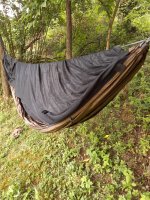
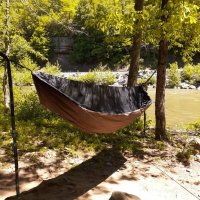
What are the pros and cons of each and what do y'all prefer? I plan to use my hammock primarily for fishing which means I'll usually be set up near water making a bug net a must. Please explain any pros and cons of both as you see them and tell me what you prefer. I am from upstate New York and will be using it in temps that range from 80 to as cold as 35 ish at night in the spring/fall. I value durability and functionality over aesthetics and weight(within reason) and will definitely be using an underquilt once the weather calls for it. I am currently looking at either a Half-Zip or an 11' 1.6 netless with a separate net like the Summer Sock or Bottom Entry by Dutchware or an Eldorado by Warbonnet, all 3 options are a similar price. I could really use some help choosing the right setup being new to the whole hammock camping thing. If more info is needed to give an informed answer please ask away, I'm sure there's thing's that are important that I am leaving out...
 
Cant say whats best for you but I prefer an integrated bug net.
My hammock netting has zippers both sides. Should I choose to not use the bug net, it simply slides under the hammock and is out of the way.
I prefer this set-up. A non-integrated bug net might work better for others.
Happy hammock hunting.
 
Last edited:
I started out with a Warbonnet Blackbird. It was a good hammock but I did not like the bug net so close to me and having to unzip it to get out in the middle of the night. I switched to a netless one. I prefer not to use a net. With that said I am thinking of getting a Dutchware Half-Wit of just get a fronkey style bottom entry net if it is buggy out. I do use permethrin on the hammock and try to select spots to stop that is not as buggy.
 
I had one (actually two) with the net built in. They had zippers on each side. I found I could tie the net to the ridge line to get rid of it if I didn’t need it. I finally decided I didn’t like it so the grandkids now have hammocks with bug nets. Now I have plain, without net units. I do want to get a net to drape over the ridge line. Those are readily available.
 
I have a Warbonnet Blackbird xlc, and couldn’t recommend it enough. The integrated bug net is 100% removable, should you wish. There is also a winter cover available that is exchangeable with the net, having 2 bug net panels for air exchange while keeping body heat in and drafts out. As long as you use an underquilt or padding (such as a foam pad or self inflatable), no worries about blood suckers biting from underneath. Here’s a really good review on it, and it’s Shug so entertaining.

 
Your weather and bugs, in my experience, always calls for an underquilt of some sort; less in summer, more in winter, but I wouldn't camp in the 'Dacks in summer without one. ymmv. (I grew up in Syracuse and spent much of my boyhood free time in the Adirondacks.)

I've got one of the original Hennessy's from about 2003/4, with the integrated bug net. Loved it for LA, not so much when it was Sept/Oct in NY... so i had a lady put me in two zippers to remove it (well, you can stash it, but it's still attached). And I like that even better.

An integrated bug net "leaks" less; really only around the zipper ends, where there's a space between them that bugs will find... and you fix that by putting a sock or bandana or something in there and zipping up against it. With an underquilt, you won't get bitten through the back. without it, you might. I treated my hammock with Permethrin in LA and had no issues... less of a problem in NY (still less here in MD). But if I used it regularly again, I would resume the regular Permethrin treatments.

A floating bug net, or whatever it's called, that's sewn in on one side and flips over the hammock, relies on touching the edge tightly to keep closed... not really a good system. too many places to leak.

They now make some removable nets that apparently slip over the whole thing like a loose sock, but I have no experience with them. They seem popular, and it would appear they prevent biting though the back. The are probably also easy to 'close' on the ends with a rubber band.
 
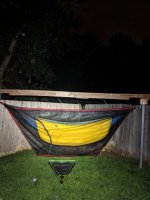
Made my own - Called a "fonky style" bug net from the guy I guess who originally made it. Pro's are you can easily set up and take down and you have coverage all over. Although typically you are using an UQ so they really can't bite you through the bottom. Con is it is a bit of extra weight to carry and bulk. I think the Pro's outweigh the cons and this style I feel gives you more room.

IMG_20190801_223936.jpg
 
+1 to the separate net - mine is also the Fronkey style. When cold enough for no bugs, it stays home. Otherwise, I avoid the chance of being bitten thru the net or hammock.

As for
"A floating bug net, or whatever it's called, that's sewn in on one side and flips over the hammock, relies on touching the edge tightly to keep closed... not really a good system. too many places to leak."

I haven't seen this to be true, in practice. Could definitely happen though.
 
I have sewn on or integrated. On the plus side, I can never forget it. On the down side, mine doesn't move outta the way easily if I want to sit in it like a chair.

Screenshot_20200710-181815_Chrome.jpg
 
I ended up going with the Warbonnet Eldorado which has the bug net attached with a zipper and can be fully removed, best of both worlds I suppose, It'll be here tomorrow. I decided to spend a few nights in it before laying out more cash for an underquilt, make sure I like sleeping in a hammock and figure out which lay direction I prefer as some of the underquilts are asymmetrical.
 
Last edited:
Anyone made their own Fronkey style using this kit?
 
I made 3 fronkey-style nets out of tule from Joann's. Sprayed down with permitherin. My boys and I have used them several times - no issues.

Mine were made super quick and dirty - basically sewed two pieces together, up both sides and across the top, and left a hole at each top corner for the suspension to go through. Bottom just hangs. I've never had a bug go under the edge to come back up. Permitherin takes care of anything trying to crawl up it.
 
I have both kinds and the bulk of them compressed is the big difference, to me. The hammock W/O the bug net is about the size of a softball, the one with the attached bug net is the size of a gallon of milk. There isn't much weight difference but the bulk might make a choice of one over the other for your situation.
 
Integrated for me. I’ve never had any issues with bugs getting in mine. I’ve also used fronkey. It works just fine. Just not as comfortable as getting in and out of my warbonnet.
 
My DreamHammock has an integrated bug net which zips on. I can also easily take it off, or replace it with the "top". The top is nice for winter camping as it helps retain heat. I would like to see DH have a way to hold the netting away from my face as I'm laying down, but it's not too much of a problem.
 
I tore a skeeter beater pro net just sitting in the hammock, so I opted for a separate net. Twice the material, but at least they can’t bite you from underneath...
 
I tore a skeeter beater pro net just sitting in the hammock, so I opted for a separate net. Twice the material, but at least they can’t bite you from underneath...

Forgot I even made this thread, seems like longer than it has been haha. I ended up going for integrated with a Warbonnet hammock and couldn't be happier. As far as getting bit through your hammock, a treatment with Permethrin or switching to a double layer hammock should completely take care of it.
 
Forgot I even made this thread, seems like longer than it has been haha. I ended up going for integrated with a Warbonnet hammock and couldn't be happier. As far as getting bit through your hammock, a treatment with Permethrin or switching to a double layer hammock should completely take care of it.
You will most likely in any situation have insulation underneath you so that wouldn't be a concern I would have. Permethrin is effective but unless you HAVE TO I personally don't use chemicals. Colorado isn't real buggy for the most part anyhow and I prefer to camp in the fall and winter and therefore don't really see bugs or people :). Two things that typically ruin my outings.
 
I have both kinds and the bulk of them compressed is the big difference, to me. The hammock W/O the bug net is about the size of a softball, the one with the attached bug net is the size of a gallon of milk. There isn't much weight difference but the bulk might make a choice of one over the other for your situation.
The full bug nets will fold nicely so if bulk is an issue I recommend folding not stuffing. I will often times pack my bug net at the bottom of my "hammock sack" which is a smaller stuff sack that holds my hammock, bug net, shammy's (for drying off a tarp before you hike out) stake bag, ground cloth, straps, and odds and ends for suspension (toggles, buckles etc). This sack is what gets packed in the "sleeping bag" compartment that is at the bottom of my packs.
 
You will most likely in any situation have insulation underneath you so that wouldn't be a concern I would have. Permethrin is effective but unless you HAVE TO I personally don't use chemicals. Colorado isn't real buggy for the most part anyhow and I prefer to camp in the fall and winter and therefore don't really see bugs or people :). Two things that typically ruin my outings.

I use a Wooki underquilt any time I use my hammock which is very effective against mosquitos so I don't treat my hammock, but I do treat the bug netting. I end up with mosquitos here during the shoulder seasons so I never camp without my net but if I'm camping I'm most likely fishing which always has me camping near water, might have something to do with it.
 
The full bug nets will fold nicely so if bulk is an issue I recommend folding not stuffing. I will often times pack my bug net at the bottom of my "hammock sack" which is a smaller stuff sack that holds my hammock, bug net, shammy's (for drying off a tarp before you hike out) stake bag, ground cloth, straps, and odds and ends for suspension (toggles, buckles etc). This sack is what gets packed in the "sleeping bag" compartment that is at the bottom of my packs.


Smallest production full bugnet I’ve found is the Warbler from hummingbird hammocks, substantially smaller than warbonnet travel net I had before. I can almost fit my hammock, net and tarp into a nalgene bottle :D (I was bored)
 
The shape of the Blackbird hammock bug net is higher than on other hammock net solutions .it stays off my face . I really like that.
 
Integrated really is convenient for those 3am bio-ventures, but they can leave you one-armed when trying to adjust your underquilt. If you can find one with zippers on both sides, it might negate.
 
For years I have used a hammock without a bug net. Just this past year I got myself a Chameleon, with an integrated bug net.

I will never go back to non-integrated bug net hammock, although I will always require that it can be zipped off...so I'm not sure where that puts me.

I tried the separate bug net, I hated it. Getting in and out, especially in the middle of the night, was a pain, and there were little things that I didn't like about it.

When I bought my Chameleon, I bought it with the bug net because in 2019 I got eaten alive a couple of times in my hammock, which normally I can cope with, but the lack of proper sleep made me miserable moreso than the bugs biting. So I got a hammock with a bug net.

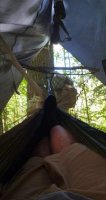
The first thing I noticed, and this may not apply to most...the bugnet keeps everything in the hammock! I use blankets because I don't like the constriction or lack of airflow or temperature control of a sleeping bag...I just prefer blankets. Obviously, blankets fall out, or hang over the side, of a hammock....but the bugnet keeps everything in place, so that was a dramatic improvement for me.

The second thing...there are times where you don't think you will need a bug net, but find out you do, and those times just plain suck. An integrated bugnet removes that mistake.
 

Back
Top