




- Joined
- Jan 29, 2010
- Messages
- 21,750
- Likes
- 81,546
These pictures are of a fish ladder, but the effect is the same as a low head dam. Ladders are often just a series of low head dams, usually too small to paddle in, but not always.
The water in these pictures is flowing left to right, until you go over the dam, the water piles up after the dam and is at that point running back up stream as a white water wave. The danger in a low head dam is if you flip and get parallel to the dam you will be tumbled back into the dam, over and over; unlike some water features that will flush a paddler out, low head hydraulics tend to hold the hapless victim in a spin-cycle. They create significant hydraulic effects for such a low structure, which is why they are underestimated by paddlers ignorant of their power, and they are efficient killers, especially in Spring when flows are high and water is cold.
Best practice is to avoid them, walk the boat around them. Self rescue is difficult, involving reaching deep into the water to the flow going downstream. Easier said than done, whitewater does not have the purchasing effects still water does for a swimmers stroke. Paddlers have been known to shed their PFDs in an attempt to sink to the bottom where the out flowing water is; a risky procedure, but it might be the only chance at escape, because a boyant body tends not to flush out.
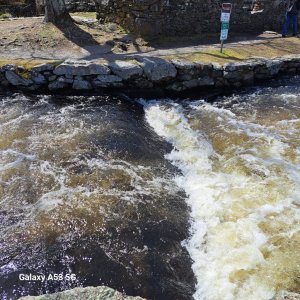
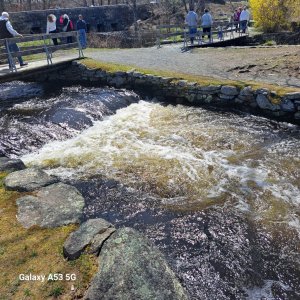
The water in these pictures is flowing left to right, until you go over the dam, the water piles up after the dam and is at that point running back up stream as a white water wave. The danger in a low head dam is if you flip and get parallel to the dam you will be tumbled back into the dam, over and over; unlike some water features that will flush a paddler out, low head hydraulics tend to hold the hapless victim in a spin-cycle. They create significant hydraulic effects for such a low structure, which is why they are underestimated by paddlers ignorant of their power, and they are efficient killers, especially in Spring when flows are high and water is cold.
Best practice is to avoid them, walk the boat around them. Self rescue is difficult, involving reaching deep into the water to the flow going downstream. Easier said than done, whitewater does not have the purchasing effects still water does for a swimmers stroke. Paddlers have been known to shed their PFDs in an attempt to sink to the bottom where the out flowing water is; a risky procedure, but it might be the only chance at escape, because a boyant body tends not to flush out.


