please educate me on off-roading/overlanding


Ummmm..... there's a HUGE freekin difference between AWD and 4WD..... WhoopdieDooo for your Subaru, but it's AWD and really has no place out in the woods.... logging roads around here are definitely passable by AWD.... and even 2WD usually.... but then, suddenly they're not navigable. And you and your shiny Subaru are stuck like a post turtle. I have no qualms about Subaru Outbacks and such. I have issues with Subaru Drivers who way over estimate their vehicle's capacity. If you're thinking about fording ANY SORT of water obstacles, you're crazy to do it in an AWD vehicle. If you knowingly choose to take a route that you will have to cross a creek, and you're trying it in an AWD vehicle.... you get what your lack of preparedness deserves. I know people love their Subarus... and I think they're decent little rides.... but if you're driving in territory where you need lift kits, skid plates, winches, snorkels, etc.... you're already well past the capabilities of your Subaru.... If you want to do that kind of overlanding, you'll be much better served buying a well used Jeep YJ or TJ.... You can toss tires and skid plates on that lil wagon and bash the daylights out of it all weekend long, and not worry so much about dinging your sweet ride up so it'll still look good in the parking lot at work next week....


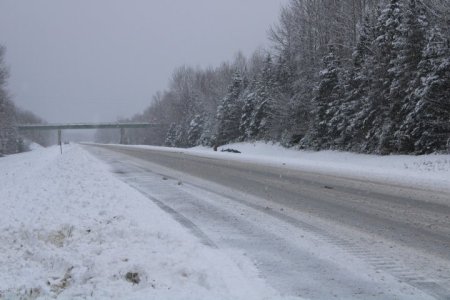
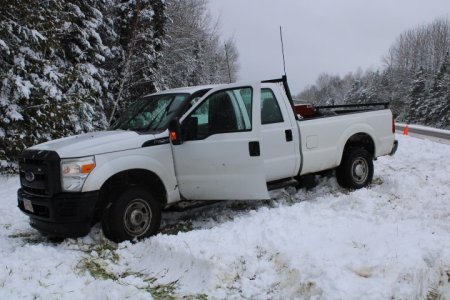
The Bridge in the back ground is the Dyer Brook Rd overpass.... Early season snow storm in Oakfield, ME.... They had just opened up 95 for traffic. There really wasn't much snow on the ground yet, maybe a quick ten inches or so.... Very slick though. The guy in the Subaru Outback didn't have a lot of experience driving in snow.... but was convinced his Outback was great in the snow.... it wasn't.... I got sucked into a rut when I backed my truck up to see if he was OK.... His 'Ru was sitting up on the snow pack... his tires weren't even touching solid ground.... They Pulled him out.... did a buncha damage getting him back up on the road surface.... And all that's right there on the side of I-95..... Anyone can have issues whether or not your driving on I-95 or up on the St Francis Road.... But I really got the impression that this guy somehow believed a little too much hype about what a good off road vehicle his Outback was....

I don-'t want to rain on anyones's parade.... I wish you a ton of safe travels and woodsy adventures with your Subaru. But please do so with a REASONABLE assessment of what that vehicle is actually designed to stand up to....


IMG_0931.JPG,
IMG_0933.JPG
 
I've heard this warning before, but never actually heard a reliable report of it happening.
Does first-person eyewitness testimony count? I pushed two vehicles, and pulled a third, out of 100-year-flood waters in 1980. As soon as their exhaust pipes drained out they were able to restart.

But don't take my word. Look at the deep-water-crossing gear Uncle Sam put on his jeeps in the 40s and 50s. Snorkel for air intake, AND 'snorkel-exhaust' for tailpipe.
 
Last edited:
@Kratos

I not sure what has been mentioned and not going to read through them either.

Skid plates for underneath. Brush guard/grill guard for the front that also protects headlights. If this is a new vehicle with sensors you MUST find a place that sells them specifically for your make and model vehicle so that they do not interfere with the vehicle sensors. (you may have to adjust sensors via your control screen)

Also a Brush guard for rear lights and blinkers. I strongly advice you get a winch. If you are ever using the winch other than to get your vehicle out of a ditch or what not, you are going to want to put your vehicle in neutral and secure your hitch with a towing rope/chain and secure it to a tree so that you don't ruin your brakes, etc.

There is a few vehicle protective covers that partially covers portions of the exterior of your vehicle to prevent scratches, same with doors.

BTW brother, I feel for ya. The new SUV I am driving has less than 900 miles and already has several scratches on the front driver side leading to the bumper, and on the hood. (shakes head in disbelief) Definitely raised my blood pressure whenever I see the scratches, and they were not my doing. Grrr.
 
Where's the FUN in that?

Back in the Day I had a 4x4 Dodge Club Cab that I upgraded with 1500 miles on the odo. Headers and side pipes, high rise, Holley, re-arched springs to fit 36" Monster Mudders, and changed out the "full time" front hubs for manual lockouts. I also installed a Thor winch in the rear, under the bed. My philosophy was that usually you drive IN to trouble, so I felt it made more sense for the fairlead to be out back, nicely tucked under the factory step bumper (also very handy for loading the car trailer). Warranty was Voided! But oh, Good Times! Hill climbing, plowing snow, and many weekends spent fourwheeling up the Platte River. There was a group of us, including two crazy brothers that had the big Scouts, with removable roofs. They both had winches too, and were the ringleaders of our off road group. There were several points between the two towns that we traveled on the river that were pretty deep, and often the bottom would change. Usually several vehicles needed winching to get across. Except mine. That was a great truck for 7 years or more, and good looking with the roll bar, grill guard, assorted lighting additions, captain's chairs and a custom overhead console I made for the sideband Midland CB (with a pair of stainless steel 102" whip antennas mounted right behind the cab) and Bearcat 101 scanner. Dang, I miss that truck...although I'd never find a parking place for it here...
That's all fine, and I rolled with a similar crowd back in the day, but we all learned hard lessons about using one's only get to work vehicle for that kind of fun.

And this really doesn't translate well to any Subaru.
 
Does first-person eyewitness testimony count? I pushed two vehicles, and pulled a third, out of 100-year-flood waters in 1980. As soon as their exhaust pipes drained out they were able to restart.

But don't take my word. Look at the deep-water-crossing gear Uncle Sam put on his jeeps in the 40s and 50s. Snorkel for air intake, AND 'snorkel-exhaust' for tailpipe.
Well yeah, anywhere one actually needs a snorkel. But the danger is widely overstated otherwise.
 
I think we're getting carried away here. Didn't sound to me like the OP intends to follow Jeeps around with his Subaru. There are countless miles of dirt mountain roads that a Subaru will be fine on in good weather.

Just the same, good skids and extraction equipment are prudent and a reasonable minimum.
 
IIRC from another thread, OP is in Denver. I’d be curious to know specifics about where the car is expected to go.

A Subaru down most FS Roads, okay. Going over Red Cone Pass... not a chance.

As I said earlier... if the OP is contemplating Skid Plates then a different vehicle is in order. :rolleyes:
 
Just my two cents... 🤔

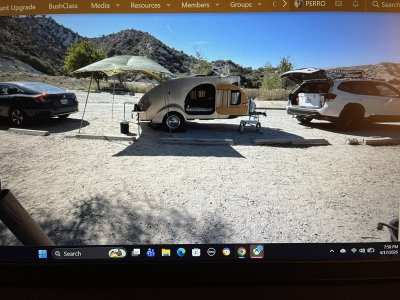
I've owned a ' 2023 Subaru Wilderness ' for the past three years, & have some firsthand knowledge on how well it handles.

I personally wouldn't drive it beyond a well-maintained dirt or gravel Camping / Lake / Stream backroad.
IMG_9884.jpeg
IMG_9885.jpeg

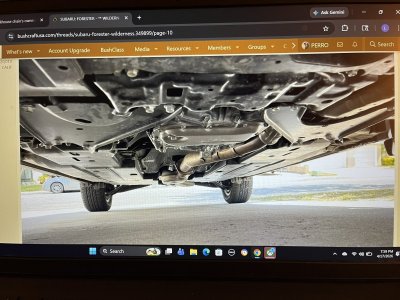
The Subaru Wilderness model has some basic Plastic Underbody Shielding, which I wouldn't waste my funds trying to upgrade.
IMG_9886.jpeg
I'm saving my funds to upgrade the " CVT " Cooling System for better ' TOWING ' reliability & longevity.


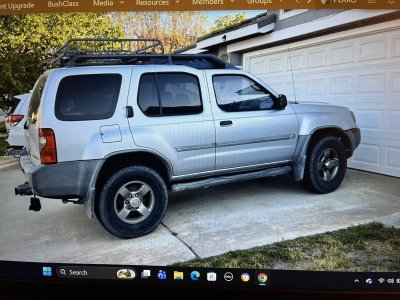
I've driven my ' Nissan Xterra ' in areas ( Northern Sierras - Mammoth Lakes ), I wouldn't attempt with the Subaru.
IMG_9887.jpeg
IMG_9888.jpeg
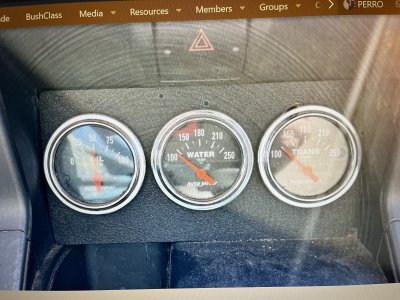
I don't consider my 2 Wheel Drive Xterra with Upgraded Auxiliary Dial Gauges / Upgraded Transmission Cooler / Upgraded 4-Core Radiator/ & Upgraded Suspension, as a serious ' OFF ROAD ' vehicle...🤔


QUOTE:
" I don't need to know everything, I just need to know where to find it, when I need it "..:3:
** Albert Einstein ** ( Footnote )
 
Last edited:
I don't want to upset to many people on here but, a Subaru isn't really designed for "Off Roading". Don't get me wrong they are great little cars / suvs but they are not a 4wheel drive vehicle and should not be treated as such. There is a reason that some if not almost all national park areas are banning them from use on certain trails. In fact, two people I know who do off road recovery wont even fool with a Subaru because of reasons beyond the owner overestimating what their vehicle can do. If you want to off road pick up a old Toyota or Jeep, something with real ground clearance and real 4wheel drive. You will be better off in the long run and it will be way way cheaper.

The first thing you need to know about off roading is, DO NOT WORRY ABOUT UPGRADES UNTIL YOU HAVE LEARNED HOW TO HANDEL THE VEHICLE AND LEARN ITS CAPABILITIES AND YOURS.

Second is, when you go off road it cost money, every time. Every time you go off road you have to service the vehicle, wheel bearings need greased, U-joints need greased, things need to be cleaned throughly and deeply, stuff will break. Once you go off roading with a vehicle the dirt, mud and grime piles up and eats at all moving components like sand paper. The stuff gets everywhere and just grinds stuff away which causes bearings to wear faster, bushing to wear faster, anything that has grease in it, filters for it, or any play that will allow the smallest particles to penetrate will immediately start to wear out and break down. So the second thing you should buy is a good tool set so you can do more than the basic maintenance on your vehicle and you need a set of tools to replace things out in the woods (I mean real stuff that breaks and not these long list of garbage stuff all of the wanna be preppers and doom scrollers talk about carrying). You need belts which can be strapped under the hood, U-joints, hose clamps, things to patch a hose, ect ect ect.

Thirdly and most importantly BUY OFF ROAD TIRES and not those stupid tires that all of the same preppers and wanna be tell you are off road tires. Granted on a Subaru you are getting into over kill if you buy a mud tire but a good set of all terrain tires should be your first upgrade.

This by the way is a all terrain tire. https://www.tirerack.com/tires/tire...s.jsp_Toyo_Open Country A/T III_Tire&code=yes

This is a road tire regardless of what the internet professionals and forum experts say. https://www.tirerack.com/tires/tire...8CHc8_EnOQhae4JSaMiGsw7T9AszCfKhVTKbEBNwtjQRs

This is a mud tire. NONE OF THE OTHER TIRES ARE MUD TIRES. I don't care what the internet forum experts say. https://rcvisions.com/products/inte...vjaGnHrViuQlHGjCgFItZPdgEGxKIiIf2DVFkn-hGL0G8


The next upgrade and purchase you should buy is recovery gear. NO CHAIN IS A SNATCH CHAIN. Do not use a chain as a recovery equipment because it will get you killed. Yes, people have used them including myself. It was all we had back in the day and we used what we had but we also understood SHOCK LOAD. Go to a pull a part and buy a few of the cheap scissor jacks. Use them to jack up the car put stuff under the tires and drive off and let the jack fall over. DO NOT WASTE YOUR MONEY ON THE LUNCH PLATE TRAY THINGS. Those things are a waste of money and should never be used...... EVER. Learn how to tie a pull strap to your vehicle in order to use it as a winch around the tire. Buy a pull strap or two. Do not buy a high lift jack because it will get you killed.

In case you are wondering, I have been off roading since about 1980. I have owned everything from 3wheelers to purpose built rock crawling buggies and everything in between. My last was tube built buggy with 38's, Dana 60's front and rear with lockers, 4-link with coil overs and high steer cross over steering with hydraulic assist, LS 5.7L with a Turbo 400 and dual transfer cases, dual winches (12K front and rear) onboard air. It went every where but on the road. The current is a 98 4Runner that has been lifted, dual cases, lockers front and rear, sitting on 35's and a very long list of custom parts for overlanding and car camping. However the 4runner is street legal and gets way better gas milage and to me is a lot more fun and way way cheaper than the buggy to run.

 
Do not buy a high lift jack because it will get you killed.
That's funny. We've used highlifts extensively forever. Coupled with chain or cable, they can double as a come-along in a pinch. Yes, you have to use some care and common sense when using them to lift. I guess some people are a danger to themselves, but in all the times our group used a highlift, we never had an incident.

It's kind of like this whole discussion. Maybe I don't understand what the definition of "overlanding" is supposed to be, but I don't assume it to be limited to what we used to call "4-wheeling". There are long stretches of back country dirt roads that are entirely passable by cars in good weather. Heck - we used to travel some of them in pintos, mustangs, and 2wd pickups back in the day. The key has always been to use good judgement, don't be in a hurry, and don't kid yourself when it's time to call it a day and either make camp or turn around and go back.

Not everyone has or should spend the money to do the rugged stuff, but there are dirt backroads to be explored that don't require a Jeep - in summer, with provisions and good judgement. Just don't be foolish and go off into the outback without knowing what you're getting into. Potentially bad weather, rock crawling, ruts, water crossings, etc are no-gos for road vehicles - but flat, well traveled dirt isn't that big of a threat. In this information age, there is no reason to be surprised by normal conditions.
 
That's funny. We've used highlifts extensively forever. Coupled with chain or cable, they can double as a come-along in a pinch. Yes, you have to use some care and common sense when using them to lift. I guess some people are a danger to themselves, but in all the times our group used a highlift, we never had an incident.

It's kind of like this whole discussion. Maybe I don't understand what the definition of "overlanding" is supposed to be, but I don't assume it to be limited to what we used to call "4-wheeling". There are long stretches of back country dirt roads that are entirely passable by cars in good weather. Heck - we used to travel some of them in pintos, mustangs, and 2wd pickups back in the day. The key has always been to use good judgement, don't be in a hurry, and don't kid yourself when it's time to call it a day and either make camp or turn around and go back.

Not everyone has or should spend the money to do the rugged stuff, but there are dirt backroads to be explored that don't require a Jeep - in summer, with provisions and good judgement. Just don't be foolish and go off into the outback without knowing what you're getting into. Potentially bad weather, rock crawling, ruts, water crossings, etc are no-gos for road vehicles - but flat, well traveled dirt isn't that big of a threat. In this information age, there is no reason to be surprised by normal conditions.
Don't get me wrong, a highlift jack is extremely useful when they are used with caution. I and most of the people I use to rock crawl with used them all the time but we used them with caution and used them within their limits and doing so never had any issues with them. I tend to point people away from them because of the dangers associated with them when caution isn't used and, caution tends to go right out of the window when you are stuck miles from help. It's the same way with winches; I have seen countless Youtube videos of people getting hurt using a winch. In almost every case I have seen, the issues isn't the winch its the user, the half welded mounts and pull points, or just using cheap equipment. Most cases the damage comes from shock load and not proper pulling technique. For people with experience its a common sense thing that a winch cable is not a towing point and should never be put under shock load, but I see it all the time. So I figure if they can't get that right then they don't need the Highlift jack either.

I also agree, this wide definition of "Overlanding" and the term itself is just overused. To me there is a big difference between "Overlanding" and "Off Roading", much in the same way as there is between, "Mudridding" and "Rock Crawling" and the vehicle build is different for each type of riding. I agree that there are endless miles of back country roads where a Subaru or most stock on road vehicles will work just fine. I have traveled thousands of miles in a 2 wheel drive on back roads without any issues. I also knew my limits and the vehicles limits and I didn't push them and I had other options if I wanted to do that. I will also add, that traveling most of those back roads I didn't break anything, damage anything and most certainly didn't need skid plates, bumper guards, or a exochage of armor to protect the vehicle. Just knowing what the vehicle could do and some common sense was more than enough to travel the back roads. If I made it to a point where I needed protection for the vehicle I swapped to a real 4wheel drive and made the upgrades as needed.
 
Last edited:
Don't get me wrong, a highlift jack is extremely useful when they are used with caution. I and most of the people I use to rock crawl with used them all the time but we used them with caution and used them within their limits and doing so never had any issues with them. I tend to point people away from them because of the dangers associated with them when caution isn't used and, caution tends to go right out of the window when your stuck miles from help. It's the same way with winches; I have seen countless Youtube videos of people getting hurt using a winch. In almost every case I have seen, the issues isn't the winch its the user, the half welded mounts and pull points, or just using cheap equipment. Most cases the damage comes from shock load and not proper pulling technique. For people with experience its a common sense thing that a winch cable is not a towing point and should never be put under shock load, but I see it all the time. So I figure if they can't get that right then they don't need the Highlift jack either.

I also agree, this wide definition of "Overlanding" and the term itself is just overused. To me there is a big difference between "Overlanding" and "Off Roading", much in the same way as there is between, "Mudridding" and "Rock Crawling" and the vehicle build is different for each type of riding. I agree that there are endless miles of back country roads where a Subaru or most stock on road vehicles will work just fine. I have traveled thousands of miles in a 2 wheel drive on back roads without any issues. I also knew my limits and the vehicles limits and I didn't push them and I had other options if I wanted to do that. I will also add, that traveling most of those back roads I didn't break anything, damage anything and most certainly didn't need skid plates, bumper guards, or a exochage of armor to protect the vehicle. Just knowing what the vehicle could do and some common sense was more than enough to travel the back roads. If I made it to a point where I need protection for the vehicle I swapped to a real 4wheel drive and made the upgrades as needed.
All good points. And I should add that there's really no point in even carrying a highlift in a Subaru.

The only reason I suggest skid plates on such a vehicle (if they're available) is that I've been on some gravel roads where the rock has been laid deep over a soft spot and it's settled into a mild rut. The loose stuff in the middle isn't stable enough to get high centered on, but without a cover it can get up into things instead of just pushing out the way. One popular route in my area has a few miles where this can be a little bit of an issue. I consider it cheap insurance, where lacking that one could be reduced to a crawl.
 
All good points. And I should add that there's really no point in even carrying a highlift in a Subaru.

The only reason I suggest skid plates on such a vehicle (if they're available) is that I've been on some gravel roads where the rock has been laid deep over a soft spot and it's settled into a mild rut. The loose stuff in the middle isn't stable enough to get high centered on, but without a cover it can get up into things instead of just pushing out the way. One popular route in my area has a few miles where this can be a little bit of an issue. I consider it cheap insurance, where lacking that one could be reduced to a crawl.
I agree that skid plates are cheap insurance. However, I think most people under estimate what a stock skid plate will do and what it is designed for. It is designed to take a lot more abuse than "Most" people who use the back roads give them. Granted, if you are banging off of rocks and causing body damage then you probably need plates but for most people I think its getting into over kill territory to swap from the stock plastic to heavy duty steel plates, other than for the rare case as you mentioned.

I just think that a lot of people tend to replace "common sense" with technology or at least try to make up for their lack of understanding and skill set with technology. I don't blame the people, I blame advertisements, Youtube, internet forums, and TV shows. Most people who want to get into off roading or the much easier "Overlanding" (for what ever that entails) would benefit more from riding with experienced people and learning from them than they will from anything they could buy or upgrade on their vehicle.

For me the first rule for any type of "Off Roading" was to never go alone and that rule wasn't meant just for the safety issues it was meant to help teach you how to do things, what a vehicle limitation is, what dangers are ahead on the trail and most importantly what your expectations should be. I think the biggest problem in the "Overlanding" or "Off Roading" community today is the unrealistic expectation of equipment. The magic of editing and click bait Youtube videos have created this world of extremism and people wrongly believe the extreme is the norm or that equipment will grant a upgrade in skill level when thats not the case at all. Don't get me wrong, I want to see more people enjoy the sport but I want to see them do it and not get hurt or break things while doing it. I just think that more people would benefit from starting small with a group of experienced riders and upgrading their vehicle as their skill level upgrades. Just because you can buy a 4wheel drive with 35's and lockers on both ends doesn't mean you know how to use the thing and sadly we see people get hurt or killed all the time because their skill set doesn't match their equipment.
 
Holly cow. There's a small novel of advice here.
My observations: the crosstrek is limited by it's angle of approach. I'd be modifying the front body work. Fab a skid plate in here. Maybe a radiator relocation will be needed.
Do whatever you can to gain more clearance.
After that it's just experience that counts. You certainly don't need a front camera.
As a beginner there's nothing wrong with hanging your head out the door and looking under the car- with experience you'll rarely need to do this.
 
Just sharing relevant topic information on ' Subaru Crosstrek Light Off Roading ' ... 🤔

Is The New Subaru Crosstrek Wilderness Actually A Capable Off-Roader?​

The Fast Lane Car


QUOTE:
" I don't need to know everything, I just need to know where to find it, when I need it "..:3:
** Albert Einstein ** ( Footnote )

That was interesting. And relevant. In my mind, “capable” means I could do that not once for a video, but rather, on a regular basis. I suspect regularly doing routes like the one shown, especially multi day overlanding adventures where you might find yourself past a practicable turnaround point, would result in a pretty short-lived Subaru.

Luckily, the West is packed with USFS and BLM roads perfectly suited for an AWD car. Real care is often required only on rougher camping spurs. And many provide solitude not found when queuing up on a more technical ‘bucket list’ 4x4 destination.
 
I agree that skid plates are cheap insurance. However, I think most people under estimate what a stock skid plate will do and what it is designed for. It is designed to take a lot more abuse than "Most" people who use the back roads give them. Granted, if you are banging off of rocks and causing body damage then you probably need plates but for most people I think its getting into over kill territory to swap from the stock plastic to heavy duty steel plates, other than for the rare case as you mentioned.

I just think that a lot of people tend to replace "common sense" with technology or at least try to make up for their lack of understanding and skill set with technology. I don't blame the people, I blame advertisements, Youtube, internet forums, and TV shows. Most people who want to get into off roading or the much easier "Overlanding" (for what ever that entails) would benefit more from riding with experienced people and learning from them than they will from anything they could buy or upgrade on their vehicle.

For me the first rule for any type of "Off Roading" was to never go alone and that rule wasn't meant just for the safety issues it was meant to help teach you how to do things, what a vehicle limitation is, what dangers are ahead on the trail and most importantly what your expectations should be. I think the biggest problem in the "Overlanding" or "Off Roading" community today is the unrealistic expectation of equipment. The magic of editing and click bait Youtube videos have created this world of extremism and people wrongly believe the extreme is the norm or that equipment will grant a upgrade in skill level when thats not the case at all. Don't get me wrong, I want to see more people enjoy the sport but I want to see them do it and not get hurt or break things while doing it. I just think that more people would benefit from starting small with a group of experienced riders and upgrading their vehicle as their skill level upgrades. Just because you can buy a 4wheel drive with 35's and lockers on both ends doesn't mean you know how to use the thing and sadly we see people get hurt or killed all the time because their skill set doesn't match their equipment.

A lot of wisdom there....which could all be applied to just about all outdoor activities.
 
Holly cow. There's a small novel of advice here.
My observations: the crosstrek is limited by it's angle of approach. I'd be modifying the front body work. Fab a skid plate in here. Maybe a radiator relocation will be needed.
Do whatever you can to gain more clearance.
After that it's just experience that counts. You certainly don't need a front camera.
As a beginner there's nothing wrong with hanging your head out the door and looking under the car- with experience you'll rarely need to do this.
Could be fun to take a beater and do all that, but one might as well buy a Jeep and call it a day.
 
That was interesting. And relevant. In my mind, “capable” means I could do that not once for a video, but rather, on a regular basis. I suspect regularly doing routes like the one shown, especially multi day overlanding adventures where you might find yourself past a practicable turnaround point, would result in a pretty short-lived Subaru.

Luckily, the West is packed with USFS and BLM roads perfectly suited for an AWD car. Real care is often required only on rougher camping spurs. And many provide solitude not found when queuing up on a more technical ‘bucket list’ 4x4 destination.

I personally would ' NEVER ' have attempted to drive thru the small depression - shallow pond of water.

The water was very dark & there might have been ' POT HOLES? or Large Boulders ? ', etc '.

They were forewarned by another driver passing by... :oops:

But, they had a ' Filming Team Crew / Recovery Team ' tagging along in another ( 4X4 ) Vehicle .. 🤔


QUOTE:
" I don't need to know everything, I just need to know where to find it, when I need it "..:3:
** Albert Einstein ** ( Footnote )
 

Back
Top