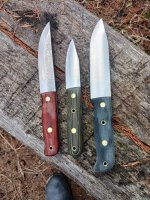
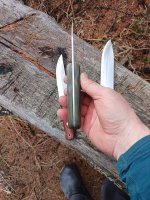
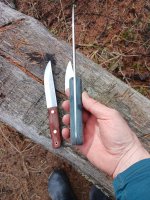
So I think for the most part I am done with the 1v experimenting. In the amount of time it took me to run all the coupons and testing I could of had over 100 blanks heat treated.
Here once again are the hardest coupons with the stock steel.
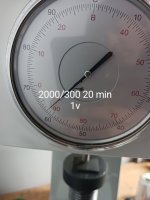
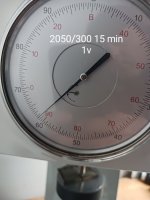
I then used a temper anneal which involved wrapping the coupons in foil and heating to 1640° for one hour, air cooled until i could hold them in my hand, and then 1400° for 24 hours. That was basically a day and half of having the oven running which is not good on the electrical bill.
I then heat treated the coupons yesterday at the same given range of temps and times as I previously did but I also added a 1950 austenitizing as Crucible says that 1950 is best for impact applications in their data sheet.
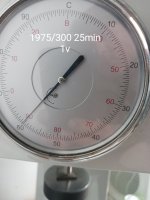
When I first tested the coupons last night they were in the 50s for hardness which pointed to deeper decarb than I realized so I surface ground them thinner and retested and here are the results.
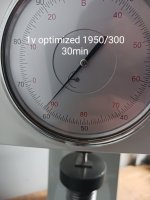
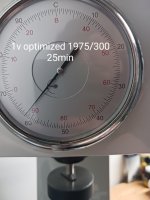
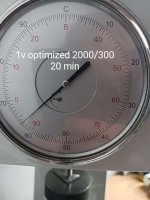
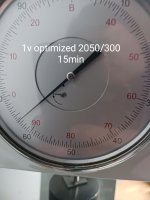
Definitely a little improvement for hardness but I question if the extra effort is worth the results. I know we are now is a knife snobbery time where many feel if the knife is not above 60 Rc it is inferior crap. But I also know that I have been using a 59 Rc wood cleaver most of the winter to make daily shavings for the wood stove and the knife goes a month plus without needing to be sharpened. The practical versus the armchair critiques it feels at times... Don't get me wrong I do appreciate the added edge stability of a higher yield strength that one experiences when the knife is 61-62 Rc but I only have seen its benefits in the field when butchering large mammals as I can butcher an elk or bear and not have an edge rolling dull on my knife when I am cold and just want to get the job done and not worry about sharpening a knife.
For many years I used exclusively Cruwear with a high temp ht which came out at 60 Rc. I experienced zero issues until one late fall I was 6 miles from the truck deep in the Salish Mountains and I harvested a large black bear that come to find out was actually starting to feed on what I assume was grizzly killed deer. It was in the low 30s and blowing with snow so a little cold and a little terrifying at the same time with the buried kill sitting right there. After an hour or so of butchering I realized my knife was getting dull as I was getting sloppy, this led to me wanting to try higher edge wear steels and it took years for me to realize I did not need more carbides but more yield strength to resist dulling from bone contact.
I did not buy the 1v for butchering knives, I have Magnacut at 63 Rc for that task, but for all around woods bumming knives where the knife is used most for wood carving chores and food prep. I truly feel 1v at 60 Rc would be perfectly fine for these tasks and still be superior to low alloys. Looking back through the data 61 Rc seems like a good goal for 1v.